

Working wherever you want—who wouldn’t want that? A workation is simply working from a different location, often abroad, while continuing to do your regular job. So it’s not a vacation, but it does offer a little more sun, space, or freedom to choose your own workspace. But what workation arrangements should employers and employees agree on?
Workations are no longer just for freelancers; more and more salaried employees are feeling the need to go on a workation, and plenty of employers are recognizing the benefits of remote work. It’s not possible for every job to be done from abroad, and by no means will every employer agree to this. But there are plenty of companies that highly value freedom and trust, giving employees the flexibility to work from wherever they choose—provided, of course, that you meet certain requirements, such as having a reliable internet connection, a suitable workspace, being reachable, and doing your job well. But all of that is perfectly achievable.
How do you bring up the topic of a workation with your employer?
It’s a bit of a fine line—being too demanding can come across the wrong way and immediately shut the door on you. This also applies to job applications, by the way. If you see a really great job but the posting doesn’t mention anything about remote or hybrid work, be sure to ask about it carefully. If you’re applying solely because you want to work remotely, you’ll likely miss the mark in most cases. Make sure you’re well-prepared for the interview and know which aspects of remote work are important, so that they take you seriously.

Want to know exactly what’s important when working remotely? Download the free step-by-step guide.
How do you prepare for a conversation with your employer?
There are both practical matters and employment law issues you need to consider. As an employee on a workation, you need to have certain tax matters in order if you plan to work from abroad for an extended period of time.
- Above all, your destination and the laws there (which vary by country)
- Travel time: The 183-rule generally applies; staying below that threshold makes things simple
- Check the tax rules that apply to your situation if you’re going away for a long time
- Check your employer’s policy
In addition, there are a number of practical steps you can take to prepare, which are essential. Here, you’ll find detailed instructions on how to prepare for the conversation with your employer. I see plenty of things going wrong for others who start working remotely.
- This isn’t a vacation; create a realistic weekly schedule that strikes the right balance between work and personal life.
- Is this your first time? Don’t overcomplicate things. Stick to Europe—or even just the Netherlands.
- Make sure you have a realistic understanding of remote work. Sometimes images online can be misleading, and the reality is a little different.
What workation agreements should you put in writing with your employer?
This varies from company to company; some have a written company policy, while others consider it part of the company culture and rely solely on verbal agreements. In addition to the time frame and location, also consider the amenities and associated costs for your remote workspace. Who pays for what?
By no means do all companies have a policy regarding workations and remote work, let alone one that’s in writing. This trend is still very much in its early stages. Legally speaking, it’s currently a request that your employer is allowed to deny. That’s exactly why it’s so important to establish clear agreements on your own. It’s important for both parties to discuss the following points:
– Travel period. Avoid traveling during a busy time, or when there are crucial in-person commitments, such as an important work meeting or event.
– Trip duration. How long will you be away? For long-term trips, you’ll need to figure out how to stay in touch with your team or clients.
– Destination. Make sure you have good amenities and, preferably, a small time difference.
– Connectivity. Always use secure internet connections and make sure you have good reception.
– A good workspace. Make sure you can work in a quiet, focused, and responsible manner. Check out some nice workspaces at your destination in advance.
– Workdays and hours. What does your workweek look like? Do you take extra time off or unpaid leave? Make sure you maintain the right work-life balance.
– Contact. Make sure your contacts and coworkers know when you’re available.


What are the most common concerns raised by employers?
Employers often have doubts about responsibility, discipline, and productivity. By going into the conversation well-prepared, you demonstrate that you’re taking that responsibility seriously and have given it careful thought. And to some extent, it’s simply a matter of learning by doing—only by trying it out will you find out if it works for your organization.
A great example of how there are more possibilities than you might think is the situation of my coaching client Myrthe, who works for a housing authority—a very traditional organization. But after thorough preparation, her discussions with her manager led to her now being allowed to work from Spain for 6 months a year. Myrthe: “I never thought I’d make so much progress in just two months—I’ve gained all the clarity I’d hoped for. I’m really, really happy! I never would have dared to dream this would happen, but it’s exactly what I want! Working with you has contributed so much to this—thank you so much for that! Thank you so much for your guidance and enthusiastic encouragement!”
Tips for employers:
- Don’t make assumptions about remote work: not everyone wants to spend half a year in Asia right away. Sometimes a week or a month in Portugal is enough. Make sure you’re on the same page about what you mean by remote work and workations.
- Learning by doing. Every person is different, so a manager or team lead can also determine whether someone is suited for remote work.
- Don’t worry that your entire office will empty out: not everyone can or wants to work remotely. Not everyone wants to be away from their family or has other obligations that require them to stay home. Or they simply don’t feel the need to travel. To give an example: at my previous job, there was a lot of freedom to work from abroad; this was common knowledge and attracted employees who wanted that freedom, but out of the 50 staff members, only 6 actually traveled regularly.
- If you find that it isn’t working for an individual or for your organization, there’s still a way back. If you try this out cautiously with your team and it doesn’t work out, you can adjust your policy accordingly.
- Assessment of the facts: Evaluate your employees’ performance. Has it been negatively affected by someone working remotely? If so, a meeting will be scheduled.
Winning talent for you
If you want to attract new employees and win the war for talent, it might be a good idea to highlight that your organization has a flexible hybrid/remote policy. This is how you can use a workation to boost your employer brand . If you take it a step further, you can even offer corporate workations and have the entire team work from a different location. This is great for team building and fostering connections among your employees, and at the same time, it boosts your company’s image. This way, you’ll please your current team and also position yourself as an attractive employer for new talent. If you then turn that into quality content for your recruitment marketing, you’ve really come full circle.
Want to learn more about remote work and workations for businesses? Click here for more information about corporate workations.

In which industries is it easy to work remotely?
A workation is easier to arrange, especially in sectors with many online jobs, such as marketing, administration, and recruitment. More and more roles are becoming digitized, which means an increasing amount of work can be done entirely online. In addition, people—especially millennials and Gen Z—are increasingly looking for employers that allow them to work from abroad. If you communicate this flexible policy or even promote it, you’ll instantly have an edge over the competition.
How do you find employers that allow you to work remotely?
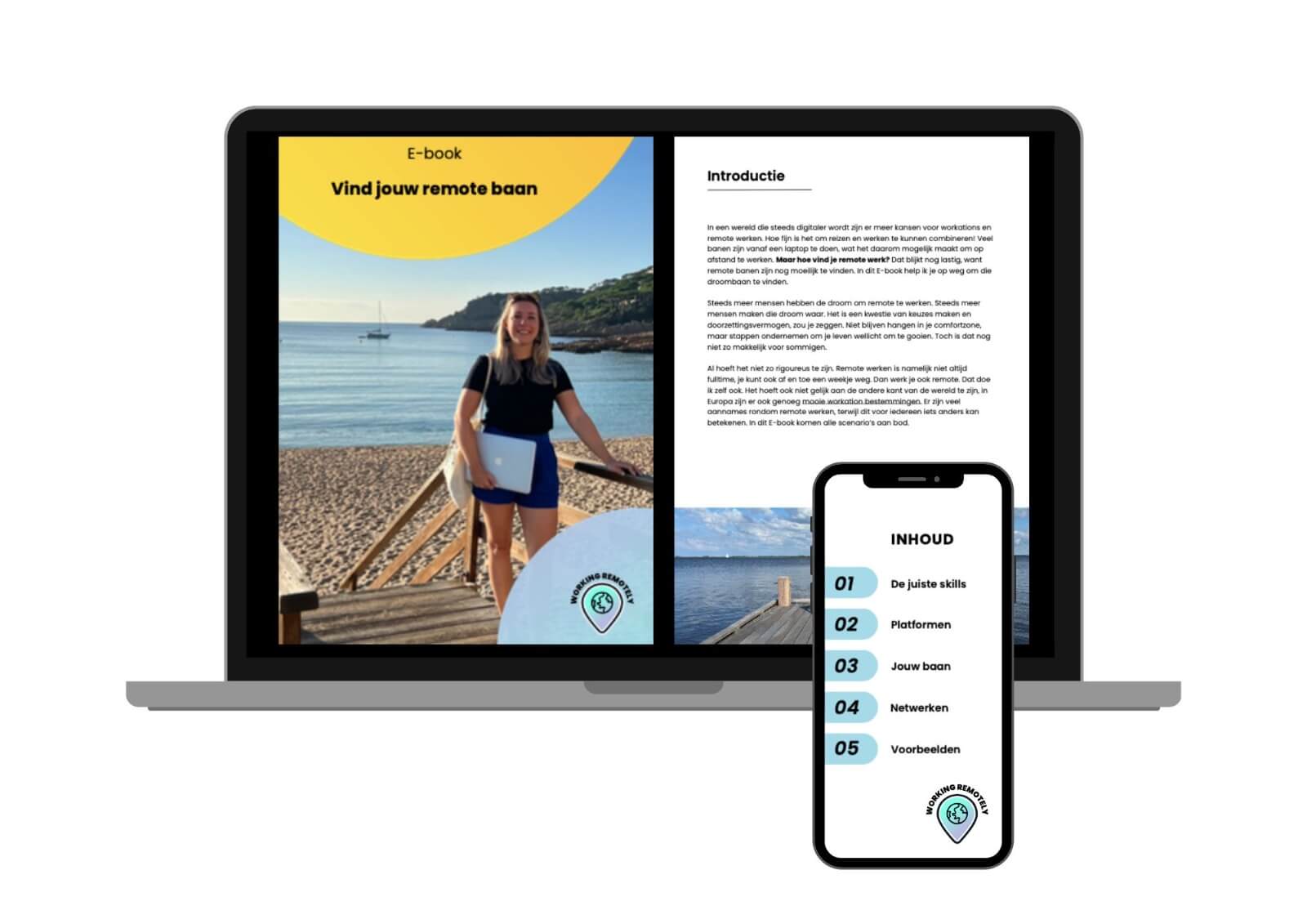
Sometimes it might feel like looking for a needle in a haystack, but these companies definitely exist, even if they can be hard to find. That’s partly because not all companies explicitly mention it on their websites, even though they are open to hybrid or remote work. Fortunately, I know of plenty of examples of large corporations and small and medium-sized businesses where this is definitely an option. In the “Ebook: Find Your Remote Job,” you can read exactly how this works.
What do you do if your employer says no?
In that case, you have to decide whether you enjoy the work itself enough—which means you won’t be able to work from abroad. As an employer, you then run the risk of someone leaving for a competitor. Tight labor market conditions mean that employees and job seekers have that luxury. In any case, never travel without your employer’s or supervisor’s permission—it could have unpleasant and serious consequences.
Learn more about remote employment