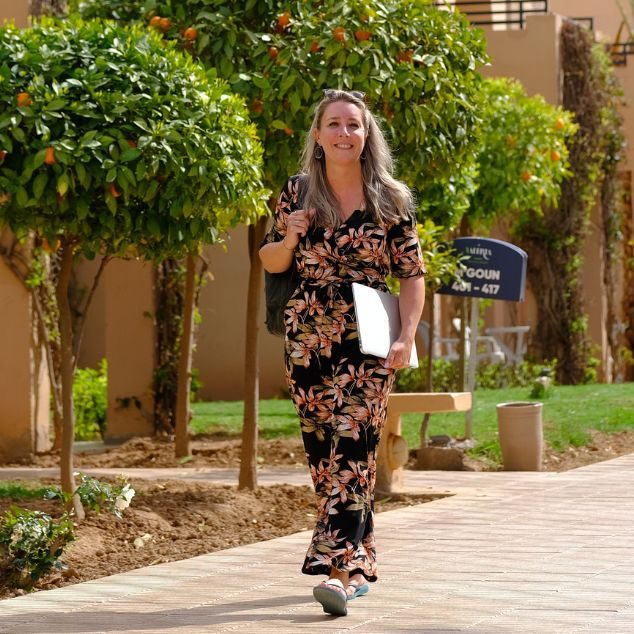


Vacation days are used up again, and it’s back to grinding it out until the Christmas break. For most people, anyway. Not for remote workers and digital nomads. They’re looking forward to a nice trip to a sunny destination to spend the winter. And who can blame them? Temperatures will drop again soon, and the days will get shorter, but you can escape abroad. Because your work just keeps going—just in a different place. Will remote work remain just as popular in the future? Yes, if you ask me. And it’ll be successful, too—provided you take responsibility for working productively from a distance.
Is remote work the future?
A lot of people want to work remotely. And the number of people who want to do this just keeps growing. You see this among both individuals and companies. It’s no coincidence that Working Remotely has been focusing on this topic every day for the past 4 years. In addition to helping people get started on finding a remote job and creating a life with more freedom, Working Remotely also organizes corporate workations. These are trips for companies that take their entire team to work from abroad. Pack your laptops and head for the sun. Work continues as usual, but the setting is so much more enjoyable. Most teams go for a few days or a week, but some even work together from abroad for months at a time.
Is working from abroad really that positive and efficient? An HR study by Personio in 2025 shows that employees who are trusted to work remotely are twice as motivated; they are also more loyal and more productive.
More and more people want to work from abroad
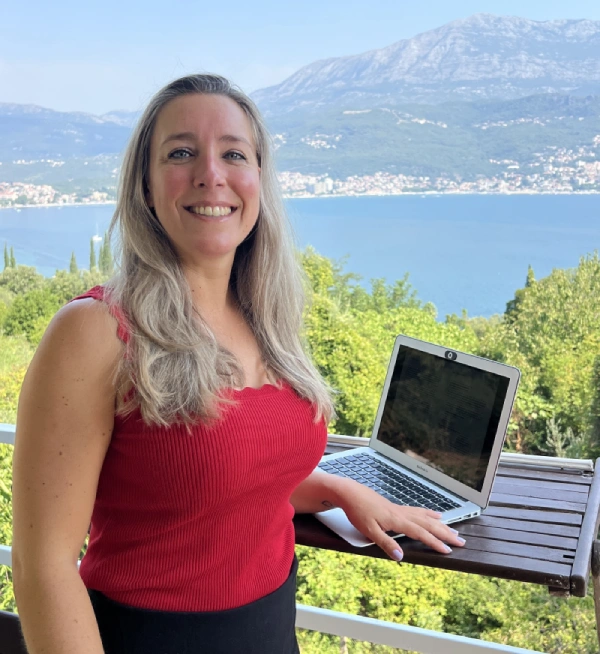
As a remote work expert, I deal with the topic of location-independent work every day. And I see many different ways of working remotely. Some people take a short trip, perhaps even staying within the Netherlands. Sometimes it’s a week of remote work in Southern Europe. Others want to take long trips and see more of the world. Still others spend the winter in a warmer climate and are away for several months—something I’ve been doing myself for 10 years. Some want to emigrate or already live abroad and are looking for an online job.
Previous findings have shown that 25% of Dutch people believe that a nomadic lifestyle has a positive effect on their work. The Global Living Report, a survey conducted by bunq among 7,100 digital nomads (700 of whom are Dutch), states that for 40%, better weather is the reason for choosing to work remotely. Joe Wilson, Chief Evangelist at bunq, says: “I find it very striking that many Dutch digital nomads are more likely to be guided by the weather than by their bank account when choosing to live abroad. This shows that success in the labor market is increasingly defined by personal well-being and quality of life, rather than by how much someone earns.”
For which age groups is remote work suitable?
While you might think that Gen Z in particular is traveling the world with a laptop, we see on www.workingremotely.nl and our social media channels that remote workers are between the ages of 25 and 55. So it’s not just the younger generation who want this. There are also plenty of families and people in their 30s and 40s who want to do things differently and are looking for more freedom in their work environment. And even 55-year-olds feel it’s time to take a different approach and start exploring their options. I regularly speak with them in my coaching programs for remote work.
Why is remote work becoming increasingly popular?
How can the growth of this trend be explained? A number of factors are at play:
- More and more work can be done online or is becoming digital. This also allows more and more people to work remotely. In addition to popular remote jobs in marketing, finance, and administration, there are also an increasing number of traditional jobs that offer online opportunities. Take, for example, teachers, thanks to the growth of online education, continuing education, and language classes. Or nurses, who now also provide online assistance, such as supporting primary care physicians with e-health services and offering online advice on health insurance.
- Because you’re seeing it more and more. There’s a lot of content being shared on social media about working online. Of course, these are beautiful images—people working on their laptops with (real!) palm trees in the background. Setting aside the fact that those images aren’t always very realistic, working from a hammock or on a crowded patio isn’t actually the reality.
- Young people want to choose their own workplace. An entire generation has entered the workforce that wants—and sometimes even demands—more freedom. Gen Z and young millennials place a high value on a flexible lifestyle and want to decide for themselves how and where they work. Hybrid work is important to them.
- The long-term labor market shortages. This means that employees have more say, and employers have a weaker bargaining position. This poses a challenge both in attracting new talent and retaining current staff. If someone considers the ability to work (occasionally) from abroad an important employee benefit, the inability to do so can be a dealbreaker, prompting them to look elsewhere—to a competitor.

What are the biggest mistakes and pitfalls of remote work?
The biggest mistake people make when working from abroad is comparing it to a vacation. That’s when expectations for a so-called “workation” immediately go awry. You have to work. And for most people, that quickly adds up to 8 hours a day—time you can’t spend doing fun things. That means you underestimate how much time you actually have to explore your destination and get out and about. You’ll also be completely wiped out if you try to see and do everything after your workday every day. That’s why the right work-life balance is crucial if you want your remote work adventure to be a success.
Poor Wi-Fi. While it seems almost a given that this should be handled properly, it still goes wrong often enough. “But the website said there was Wi-Fi.” Working online requires stable and fast internet, and that’s not always good enough at accommodations. Good Wi-Fi is crucial for remote work—and it goes beyond just being able to scroll through Instagram during your vacation. Check reviews about Wi-Fi and run a simple speed test to check the connection. And make sure you have a backup plan—by upgrading your data plan or using an eSIM, for example. Or book through Working Remotely, so you can be sure you’re in good hands. Here you’ll find suitable workation accommodations for both individuals and groups.
People also tend to take a good workspace for granted. Yet work makes up nearly half of your trip. Choose a place to stay with a comfortable workspace, or head to a coworking space. These days, you can find them just about anywhere in the world—especially if you’re planning to work remotely for an extended period. You want to be able to work in peace and focus, which isn’t possible on a crowded patio while your laptop overheats in the sun.

What are the tax rules regarding working from abroad?
Working abroad temporarily or emigrating can affect your tax situation. This depends heavily on your personal circumstances.
– How long will you be staying abroad?
– Which country are you traveling to? Is it inside or outside the EU?
– Where do you actually live, and where does most of your life take place?
– Are you an employee or a freelancer?
– Do you own your own business? Are you registered with the Chamber of Commerce?
Would you like to work from Spain for a week every now and then? Would you like to work primarily from Asia? Or are you considering emigrating to Sweden? In all these cases, the rules and implications are different. In many cases, if you stay abroad for fewer than 183 days, you’re in good shape when it comes to tax implications and taxes. Also keep your social security status in mind: what happens to your state pension accrual, health insurance, and retirement benefits? You may need to apply for a Digital Nomad Visa; be sure to check the regulations and requirements at your destination. You can read more here about the tax rules for working abroad.
There may also be implications if you are an employee. If you start working remotely from abroad for an extended period, this could affect your employer. Therefore, be sure to review this policy and carefully coordinate the arrangements for remote work. Also consider practical realities such as workplace requirements and liability.
Are you an entrepreneur looking to become a digital nomad? If so, this may affect your registration with the Chamber of Commerce, your municipality, and the tax authorities. Find out more about the potential implications at Ondernemersplein.
The Workplace of the Future
Doing good work is all about output. Well-being is becoming increasingly important, and happy people perform better. If you have (largely) the freedom to choose your workplace, that brings you a lot of job satisfaction—and, as a result, better results. Of course, you do need to take responsibility for this. Your employer (or client, if you’re a freelancer) will likely be keeping a close eye on you if you move abroad, since people can sometimes be skeptical about remote work. So live up to your promises and ensure commitment and results, so that the trust placed in you proves to be well-founded. And if you’re an entrepreneur? Without discipline, your business can quickly spiral downward. You simply have to deliver.
As bestselling author Charlotte Labee also says: “The world of work is changing. That’s nothing new. But the direction in which it’s changing is more fascinating than most people realize. Because behind all the talk about AI, remote work, and the four-day workweek lies a deeper shift—a shift toward humanity.”

How do you find a remote job?
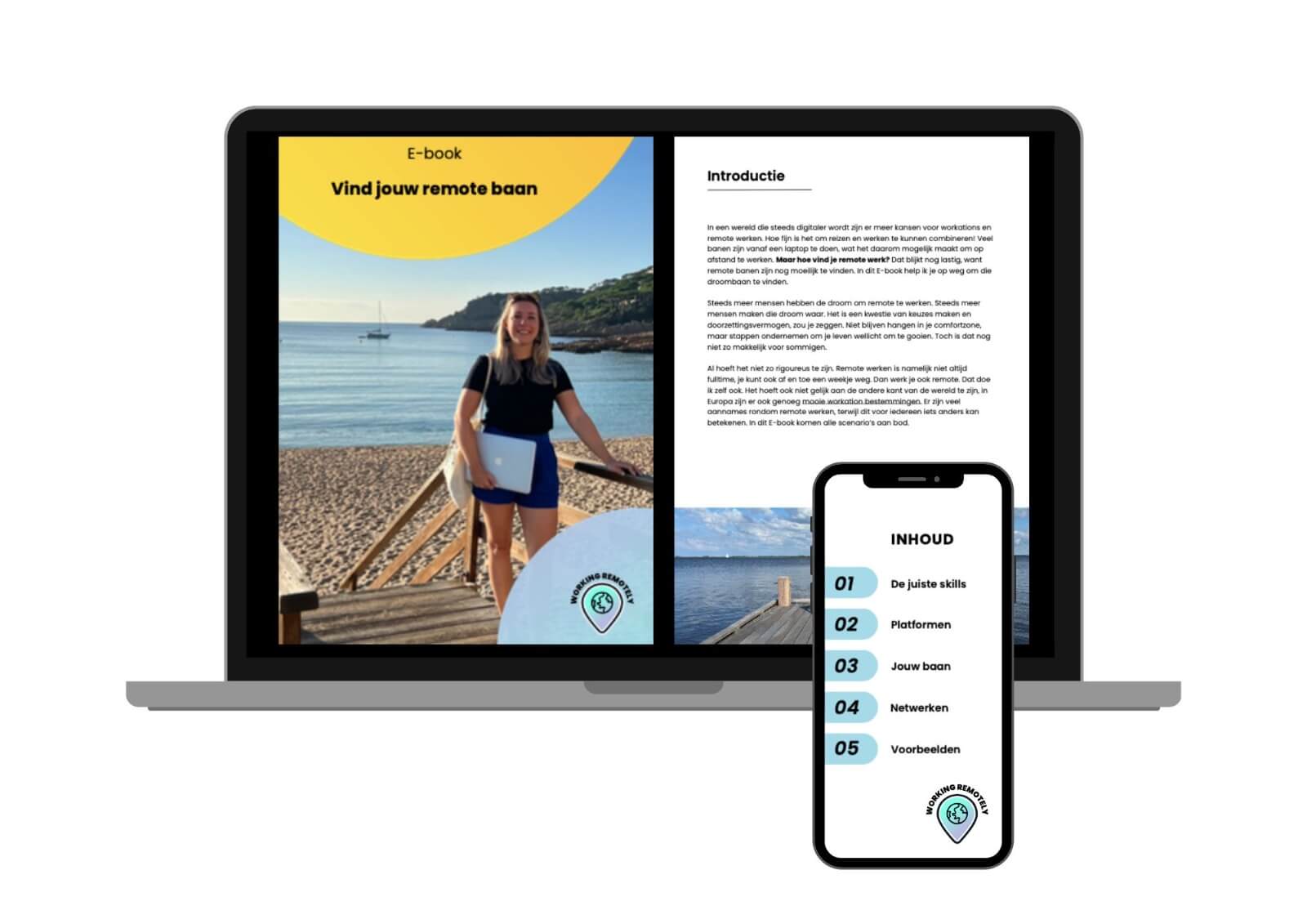
Remote work sounds great, but where do you find a job like that? It’s a question I’ve been asked every day for the past four years. Those jobs definitely exist, but they aren’t easy to find and aren’t just lying around for the taking. Do you want an employer who embraces remote work, to work as a freelancer from abroad, or to start your own online business with complete freedom? Then you’ll have to persevere. Search thoroughly. And be flexible. The security of a salaried job, with a top salary and complete freedom, is a pipe dream for many. More often than not, you’ll have to make compromises. Maybe you’ll find a great employer, but you’re “only” allowed to be away for a few months a year, or you’ll start your own business and travel the world, but earn less money. For me personally, the latter is true, but I’m a happier person as a digital nomad. And that, too, is a form of wealth.
If you think you’re doing your best by throwing your resume over the fence to me, or sending me a message that puts the ball in my court to find you a remote job (yes, that happens every day), it’s not going to work. But if you’re willing to put in the effort, If you take the right steps, you’ll definitely succeed—whether you’re 25 or 55. I’d be happy to help you with this:
– Schedule a coaching session with Alieke at
– Start the online course and explore your options at
– Read the blogs on workingremotely.nl and gather information
More inspiration on remote working
Online geld verdienen: de 25 beste manieren om vanuit het buitenland te werken