

When the clocks go back an hour in the Netherlands and it’s already dark at 4:30 p.m., I start counting down. Not to the holidays, but to the months when I open my laptop with the sun on my face. Because as crazy as it might sound, winter is my favorite season to work from Italy. The heat is gone, the tourists have gone home, and Italy belongs to the Italians again.
For many people, spending the winter in Italy brings to mind images of retirees in a camper van on the coast. But as a remote worker, you spend the winter differently. In addition to that lovely winter sun, I’m mainly looking for a place with a stable internet connection and an environment where there’s still something to do after work. In this blog, I’ll share where it’s really nice to work in the winter, what to watch out for (spoiler: the cold is often inside, not outside), and how long you’re actually allowed to stay.
Why Winter Is the Best Season for a Workation
In the summer, Italy looks its best in your photos, but not necessarily when you’re sitting at your laptop. Temperatures of 30 degrees and higher are not uncommon in the south, accommodations are expensive and fully booked, and popular spots are crowded. From November through March, things are different. You’ll generally pay less for accommodations than during peak season, you’ll have the squares and beaches almost to yourself, and it’s easier to connect with the locals.
I notice this every year at my favorite little bar in Salerno. In the summer, tourists come and go; in the winter, the same faces are sitting at the bar. After a few weeks, they know how I like my coffee and ask how my work is going. Those little moments are what make a long stay so much more valuable than a week-long vacation.
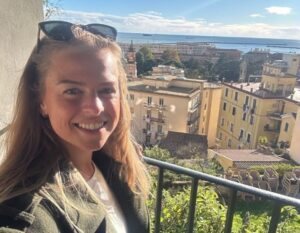
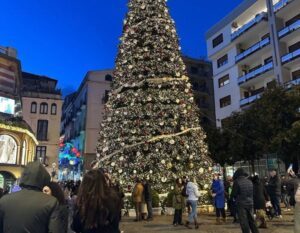
And then there’s the light. The farther south you are, the longer the winter days. Around the winter solstice, you have over an hour and a half more daylight in Salerno than in Amsterdam, and in Sicily, nearly two hours. That extra time is mainly in the morning. In Amsterdam, the sun doesn’t rise until around a quarter to nine, while in Salerno it’s already up around a quarter past seven. In the evening, there’s not much difference: even in southern Italy, it gets dark around 4:30 or 5:00 p.m. For me, that means starting early, working my first hours in the morning light, and stepping outside for a bit at lunchtime, instead of waiting until after work.
How warm is it in Italy in the winter?
It can get cold in Italy, too. If you visit Milan or Turin in January, temperatures will be around freezing. There’s a big difference between the north and the south. Here are the average temperatures in January, both during the day and at night:
- Catania (Sicily): 16 °C during the day, 5 °C at night
- Palermo (Sicily): 15 °C / 9 °C
- Cagliari (Sardinia): 14 °C / 6 °C
- Naples (Campania): 13 °C / 4 °C
- Bari (Puglia): 13 °C / 5 °C
- Lecce (Puglia): 13 °C / 4 °C
- Rome (Lazio): 13 °C / 2 °C
- Florence (Tuscany): 11 °C / 2 °C
- Milan (Lombardy): 6 °C / -1 °C
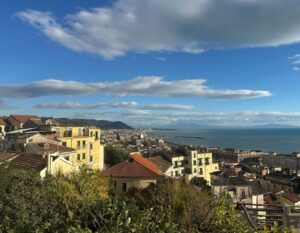
On a sunny January day in Salerno, I often have lunch outside in the sun, with my coat draped over my chair. But as soon as the sun disappears behind the mountains, it cools down quickly. So be sure to bring a warm sweater, even if you’re heading south.
The Cold Nobody Tells You About: Indoors
This might just be the most important tip in this entire blog. In Italy, it’s often more pleasant outside than inside during the winter. Houses in the south are built to stay cool in the summer: stone floors, high ceilings, thick walls, and often very little insulation. It’s wonderful in August, but not so great when you’re sitting at your laptop for eight hours in January.
In addition, Italy regulates when and for how long heating may be used based on climate zones. The country is divided into six zones, from A (the warmest) to F (the coldest). For the 2026/2027 season, the rules are as follows:
- Zone B (including Palermo, Catania): December 1 through March 31, up to 8 hours per day
- Zone C (including Naples, Salerno, Bari, Lecce): November 1 through March 31, up to 10 hours per day
- Zone D (including Rome, Florence): November 1 through April 15, up to 12 hours per day
- Zone E (including Milan, Bologna, Turin): October 15 through April 15, up to 14 hours per day
Heating may only be turned on between 5:00 a.m. and 11:00 p.m., and the guideline for homes and offices is a maximum of 20 °C (with a 2-degree margin). Municipalities may grant exceptions during cold weather, and in practice, many homes have their own heating systems, such as an air conditioner with a heating function.
When booking, always ask how the accommodation is heated. Is there central heating, an air conditioner that can also heat, or a heater? Are the windows double-paned? It may sound like a minor detail, but it determines whether you’ll have a pleasant month of work or spend the whole day with a blanket draped over your shoulders. That’s why I like to work in a small bar or coworking space during the winter: it’s warm there, there’s coffee, and you’re around other people.
The Best Places to Spend the Winter as a Remote Worker
Sicily: the most sunshine
If you want the warmest climate, Sicily is the place to go. Palermo is a raw, vibrant city with markets, street food, and a growing international community. Catania, at the foot of Mount Etna, is slightly smaller and has a more student-oriented vibe. Both cities have an airport with direct flights to the Netherlands, though there are often fewer airlines flying in the winter than in the summer.
Campania: My Home Base
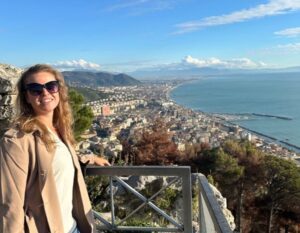
I spend the winter in Salerno myself, and that was a conscious choice. The city is bustling all year round, even when the Amalfi Coast next to it is largely in hibernation. Many hotels and restaurants along the coast close during the off-season, between November 1 and April 1. So if you want to stay on the Amalfi Coast in the winter, choose a place where Italians actually live. From Salerno, you can quickly reach Naples by train, and with two airports nearby, I can always find a flight home. I’m also part of an active digital nomad community, and they regularly organize meetups—from coworking days to aperitivo gatherings—even in the winter!
Puglia: Peace and Space
Puglia is one of Italy’s most popular regions in the summer, but it gets quiet in the winter. If you choose a city like Lecce or Bari, you’ll have access to all the amenities, student life, and good train connections. Smaller coastal towns, on the other hand, can feel a bit deserted in the winter. This is ideal if you want to focus, but less so if you’re looking for company. The great thing about Puglia is that it’s compact, so you can get anywhere in just a few hours.
Sardinia: for those who want peace and quiet
Cagliari is a pleasant, easy-to-navigate city with a mild winter climate. Outside of Cagliari, Sardinia is very quiet in the winter: many tourist attractions are closed, and transportation options are more limited. It’s perfect for a month of focused work, but less so for those who want to travel around. Here’s a recommendation for accommodations: https://workingremotely.nl/accommodaties/casa-sardinia-italie/
Rome and Florence: Culture Instead of Sun
If you’re less interested in warmth and more in culture, Rome and Florence in the winter are a real treat. It’s colder, but the museums are less crowded and the lines are shorter. Plus, you’ll find more coworking spaces here than in the south.
How long can you stay?
Good news for Dutch and Belgian citizens: as an EU citizen, you don’t need a visa, and the Schengen 90/180-day rule doesn’t apply to you. That rule is intended for people from outside the EU. You may stay in Italy for the first three months without having to register anywhere. If you stay longer, you may need to register with the municipality (the comune) may become mandatory. The documents you’ll need depend on your situation, so be sure to check with the comune where you’ll be staying in advance.
Please note: The length of your stay in Italy may also affect your taxes, health insurance, and registration in the Netherlands. This varies from person to person. Always check with an advisor or an official source, such as the Dutch Tax and Customs Administration or the Italian comune, before planning a long-term stay.
Working in the Winter: How to Keep It Practical
Spending the winter is different from going away for a week. Here are a few things that help me:
- Bring your own internet connection. I always use a portable Wi-Fi hotspot with an Italian SIM card (I pay about 25 euros a month). That way, I’m not dependent on the Wi-Fi at my lodging or a café.
- Ask about heating and insulation before you book, and ask for a photo of the workspace.
- Book for a longer stay and pay less. Many accommodations offer discounts during the off-season for stays of a month or longer. It doesn’t hurt to ask.
- Check opening hours and schedules. In winter, some buses and ferries run less frequently, and beach bars and coastal restaurants are closed.
- Get into a rhythm. Start early, have lunch outside in the afternoon sun, and close your laptop when the light fades. I like to end my day with a walk to the beach and an aperitivo with friends.
The Italian winter has its own rhythm
What I perhaps like best about spending the winter here is that you get to experience a different side of Italy. In December, the streets are filled with Christmas lights and there are nativity scenes, the presepi, which are a tradition in their own right in Campania. On January 6, the Befana—the good witch who brings candy—arrives, and Italy wraps up the holiday season. After that, things quiet down—in a good way. The city is once again all yours and belongs to the people who live there. I truly love the peace and quiet that returns.
To me, winter in Italy doesn’t feel like working while traveling, but like just living—only with more sun, better food, and longer lunches than in the Netherlands. Still not sure if it’s right for you? Check out my blog post on why Italy is the perfect country for a workation.
More inspiration for workation destinations in Europe
Op reis in Albanië: 18 tips voor het noorden, Tirana en de zuidkust
https://workingremotely.nl/what-are-the-hotspots-for-digital-nomads-in-portugal/