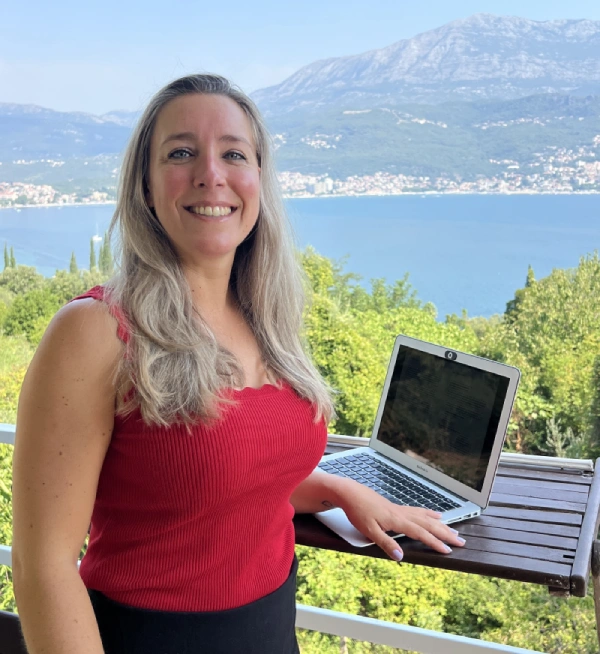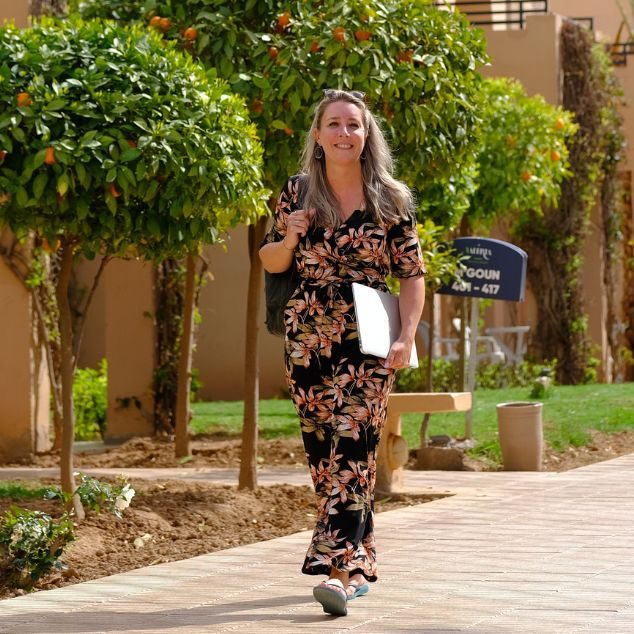


An espresso on a terrace in Salerno, my laptop open, and no longer a boss telling me where I have to be. I’m Romée, and this is what my workday looks like now. But that’s not how it started. I’m not a digital nomad who went all in and took off on a whim. Travel has always been in my blood, but it took me seven years to actually dare to take that step. I’d love to share my story to inspire you.
My love for Italy began in Rome
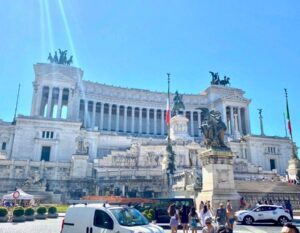
My love for Italy started early, but it really took off in 2018. I was in my final year of college and moved to Rome temporarily to write my thesis. I graduated with my own media concept: creating a website where people can find inspiration and information about Italy. That thesis led to Your Italian Travel Guide.
Actually, “remote work” had already started a little bit back then, though I didn’t know how to call it that at the time. I know my target audience is in the Netherlands, but the inspiration for my content came from Italy, so I realized early on that I needed to be there more often to be able to write about it properly.
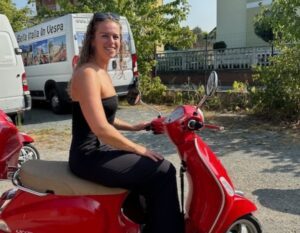
Still, after 12 months, I decided to go back to the Netherlands. I was 21, my savings were gone, and I was having a hard time finding work in Italy because I didn’t speak the language well yet. So I went back to the Netherlands and started working at a great agency where I was able to gain experience in the marketing department.
From a full-time job to freelancing: How it all got started
My freelance career didn’t start with a grand plan, but with my network. I told a few people around me that I wanted to start working as a freelance marketing specialist. Through word of mouth, I landed my first, smaller assignments. Step by step, that old network grew into a base of new clients, and it still forms the foundation of my marketing work as a freelancer.
In addition, I already had my own website, Your Italian Travel Guide, where I visit all the regions and cities to see what there is to do and what events are taking place. I incorporate all that information into my website and the travel guides I sell.
The moment everything changed
In 2024, my marketing department was dissolved, and with it, I lost my job security. However, I didn’t feel panic or despair; instead, I saw this as a perfect opportunity to travel around Italy. And perhaps it was also the right time to think about what I actually wanted.
Within two weeks of that unpleasant phone call, I was driving with a car packed to the brim to my first overnight stop: Lake Maggiore. Your Italian Travel Guide was already up and running at that point, so at least I had a reason to rediscover every corner of the country and share it with my followers.

Six months, nine regions, not a single euro spent on lodging
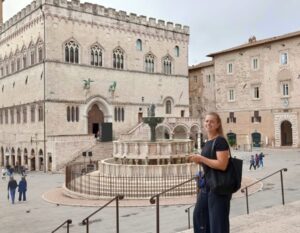
My route took me from Piedmont and Lombardy through Lazio, Umbria, Molise, Campania, Puglia, Basilicata, Calabria, and finally Sicily. I wanted to make my trip a unique experience and decided not to spend a single euro on lodging. Instead, I posted a request on Facebook and was able to stay with locals for a few nights in exchange for doing some small chores and odd jobs around the house.
That’s how, at the start of my trip, I ended up at a B&B in Piedmont where I learned a ton about the ins and outs of running a guesthouse. But I also once stayed with someone who lived in an old school building, somewhere on a hill behind a church in Umbria. I slept on the floor on a mattress, but I didn’t mind at all—the experience was amazing. Italian hospitality surprised me so much—people shared their guest rooms, couches, or second homes with me. That’s still one of the most beautiful things I’ve ever experienced.
After six months, I realized I didn’t want to go back to my 9-to-5 job where I sat in an office all day. I decided to travel back from Sicily to Salerno, just south of Naples, because I’d made some friends there during my trip. Before long, I’d found a room in a cozy apartment there. I live with two Italian women, and I picked up the language in no time.
What I Learned along the way about remote work
Traveling a lot also means planning my workdays carefully. I wanted to have time left over to explore, so I often worked in the morning—before or after breakfast—at the homes of the people I was staying with at the time, or in the evening once I was back home.
The language was definitely a hurdle at first. I didn’t speak enough Italian yet to make myself understood, but luckily I didn’t need to for my Dutch clients. Now, two years later, I speak the language well enough to have nice chats with my roommates and friends.
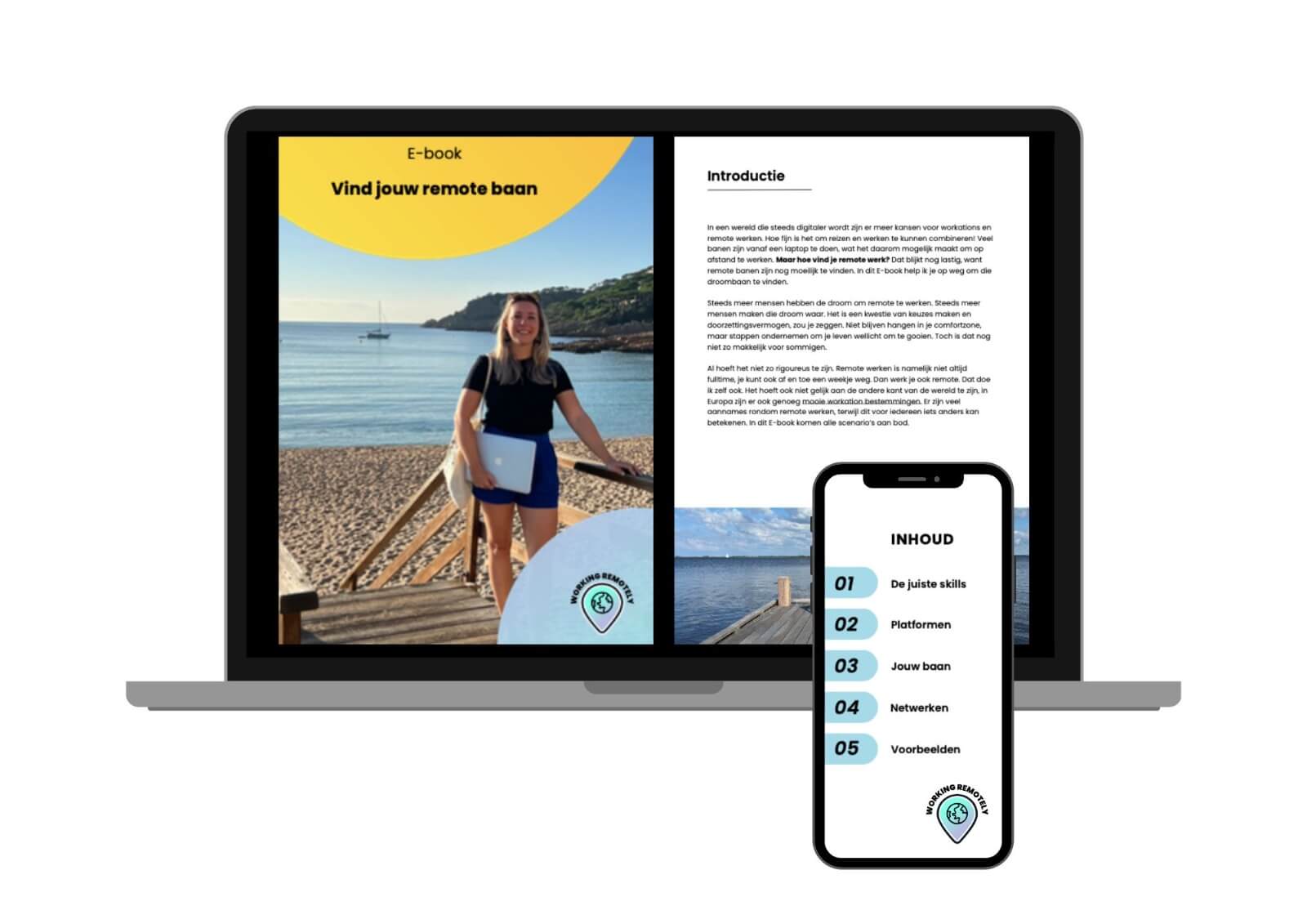
How your Italian travel guide and Working Remotely found each other
I’d been thinking for a while about adding an article on working in Italy to Your Italian Travel Guide, which, up until then, had mainly shared vacation inspiration. Through LinkedIn, I got in touch with Alieke from Working Remotely, and our collaboration grew from there: together, we share more information about remote work in Italy, so you don’t have to figure out on your own what we both already know.
My advice if you want to start your own business
If there’s one thing I want to share with people who want to start working remotely, it’s this: start by looking at what you’re capable of. What are you good at? What are your possibilities and opportunities—whether from your current salaried job or, for example, if you want to start your own business?
Be clear about that for yourself and share it with the people closest to you. Nine times out of ten, that’s where your first assignments will come from. Only after that will a website or a strong social media strategy help you attract new clients, but for me, the foundation was: what can you do, what do you want, and who is your client.
I tried it when I was 21. But I don’t think it would have worked out back then, because I simply didn’t have enough experience with entrepreneurship and working for myself. By the time I was 28, I had a lot more experience and enough confidence in myself to embark on this adventure. I haven’t regretted it for a single moment and enjoy every day. So for me, there wasn’t a specific moment when I was “ready.” There was just a moment when I dared to do it.
Ready to take that step yourself?
Are you unsure about how to get started with remote work, or would you just like to bounce some ideas off someone about your situation? Contact us for personalized coaching through Working Remotely; together, we’ll explore what you have to offer and how to turn that into a working (or traveling) reality.

More inspiration on remote work and Italy
:
Online geld verdienen: de 25 beste manieren om vanuit het buitenland te werken