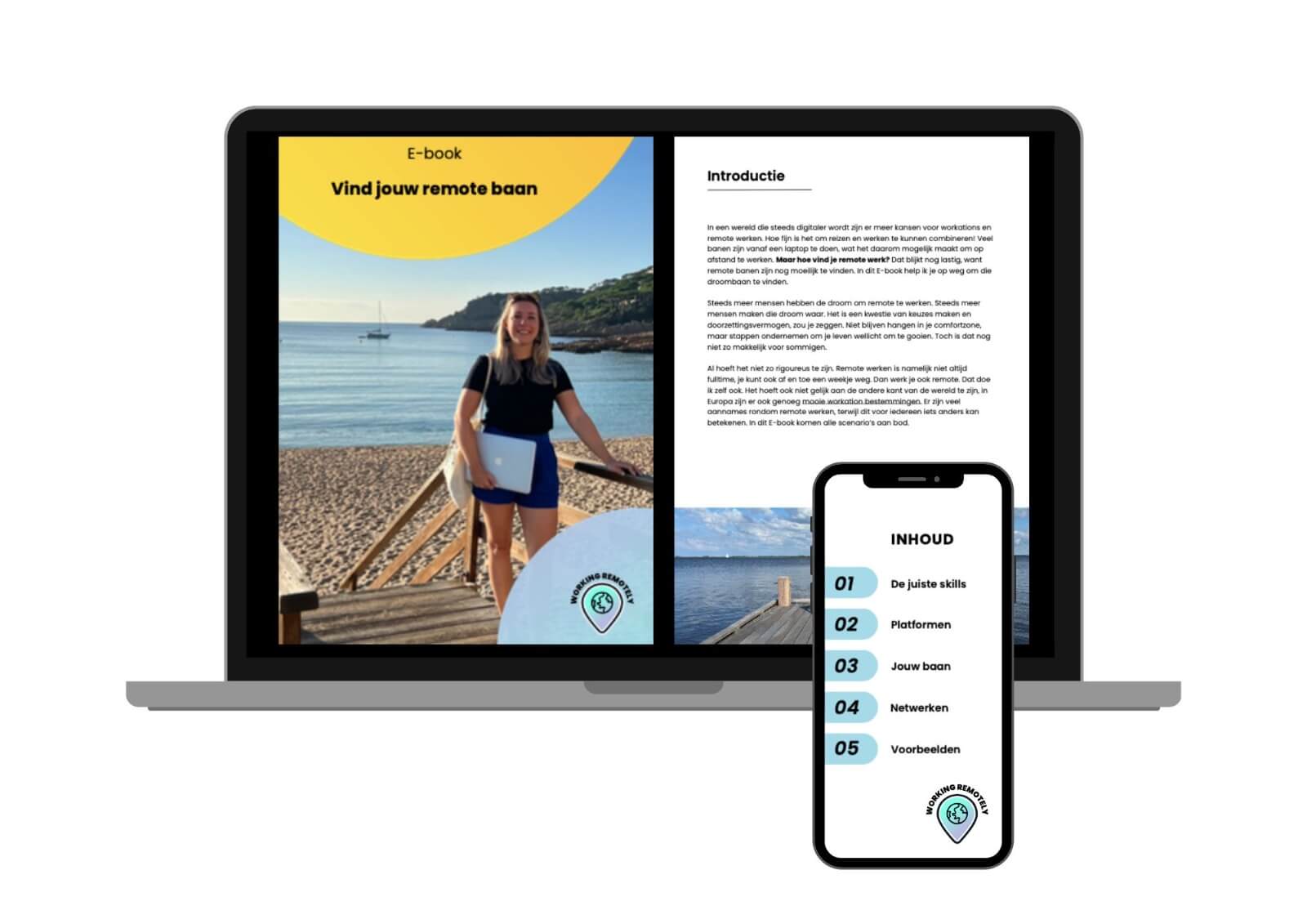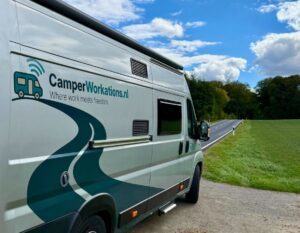


Working from an RV sounds like the ultimate freedom: flipping open your laptop overlooking the ocean and deciding where to work. In real life, vanlife as a digital nomad is also quite a logistical puzzle. The right job, good internet, a good workplace and staying productive on the road. Vanlife offers the freedom that no office can match, but it also requires good preparation. In this article, I list all the practicalities so you know what you’re getting into.
Why more and more remote workers are choosing vanlife
The rise of working from home has created a domino effect: if you don’t have to be in the office anyway, why sit at home? Vanlife and working from an RV are exploding in popularity among young people, families, and also the elderly that still work. RV life is for all ages. The combination of freedom, adventure and low overhead attracts everyone from freelancers to full-time workers. But romance and reality are sometimes far apart. Those who leave well-prepared have the best chances for a productive and relaxed lifestyle on wheels.
Internet on the go: basic necessities for a digital nomad
Without internet, no online working. This is immediately the first thing you should seriously consider if you want to combine traveling around in an RV with working online. Without good connectivity, you simply cannot work, no matter how nice your location. Are you using your phone as a hotspot, do you have enough data and is the speed sufficient for your work? A stable connection is not a luxury but a basic requirement.
The best options for internet in your RV:
- Your own data bundle: If you are a Dutch person and stay within Europe, you can use your own data, which is very convenient. Roaming within the EU is now included for many subscriptions, but be sure to check what kind of subscription you have and what limits apply.
- Local sim card with data bundle: You can buy a local sim card at your travel destination. This does not cost much and is often available in almost every supermarket. On some phones you can also use a dual sim cards at the same time and thus combine two providers, which is also ideal.
- eSIM: There are more and more providers of eSIMs, which you buy easily online and is available for almost every country. I do this myself. I really like the fact that you can arrange this before you leave, and turn it on right on the spot. Upgrading also works super simple. But, in my experience, it doesn’t work equally well everywhere.
- MiFi router or 4G/5G router: A dedicated mobile router in your RV provides more stability than using your phone as a hotspot.
- Starlink: Elon Musk’s satellite internet is now available for use in lots of places around the world. You buy the equipment and pay a monthly subscription. Although there are still countries where it is prohibited. So check that before you leave. I know of examples where customs confiscated an entire satellite. It is ideal for remote places, but more expensive and heavier to carry.
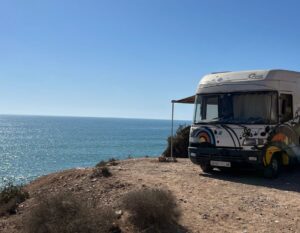
Keep in mind that in mountainous areas or in rural areas you will frequently be without coverage. Schedule important calls or deadlines at times when you know you will be in a good location. My tip, get here a day in advance so you can check the internet. You can’t have a bad connection in an important video meeting with a client; that responsibility lies with you. You also won’t be the first to suddenly have a faltering connection in the RV during a storm, get to a nearby restaurant with stable wifi then, for example.
A good workplace: ergonomics and tranquility in a small space
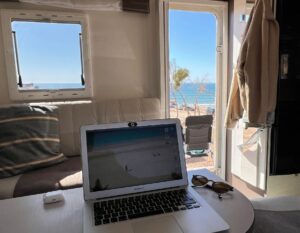
An RV is compact. If you also work in it for a good number of hours a day, you will quickly notice it in your back, neck and concentration. Invest in a good work setup. Also choose your location consciously. A quiet wooded area or a quiet parking lot provides more concentration than a busy campground. Some vanlifers work early in the morning or just late in the evening so they can make meters during the day or do some fun work.
What to look out for at vanlife:
- Digital nomad gear – A folding laptop stand, extra screen and an external mouse and keyboard cost little but make a world of difference. I personally use gear from Remodius for this, all lightweight and foldable gear from a Dutch manufacturer.
- Sitting posture – Many RVs have limited space as a workation, think carefully about a nice place to work during your trip. Make sure you have a good sitting position, otherwise you will soon suffer from back pain.
- Noise and distraction – Noise-cancelling headphones are not a gadget for vanlifers but essential tools. On a busy campsite, with kids playing nearby or in a city parking lot really need them. I personally use noise-cancelling earphones, nice and compact. Invest in a good brand though, I’ve made a bad buy before.
- Adequate power – A necessity in the RV anyway, but make sure your equipment can be charged. Keep in mind that all this charging also eats up quite a bit of energy.
- Heating/cooling in your RV – Especially if you go to cooler destinations, but in winter in southern Europe, heating is not a luxury. Especially if you sit still for a long time behind your laptop, it quickly gets cold. Conversely, sweaty typing in your camper is not exactly pleasant either.
Realistic planning: travel, discipline and productivity
This is where many vanlifers, and remote workers in general, go wrong. Many people underestimate how much impact constant travel has on your energy and concentration. There is also the temptation to go to a nice beach, or sit in the sun. When traveling, there are so many fun distractions, just try to resist all those temptations. And don’t underestimate the tasks like refilling water, discharging sewage and running errands, either. Still, your online work with additional obligations is very important, because without income you may not even be able to make this trip.
Tips for a productive routine on the go:
- Drive at night or on weekends. Schedule your driving days at times when you are not working. That way you won’t lose productive hours moving around.
- Stay in one place for at least three days. Moving on too quickly will cost you energy and time. Settling down allows you to build a nice rhythm.
- Make a weekly schedule! Know which days you need a lot of focus and then don’t plan travel days. Also, don’t underestimate the distances you have to drive, which will squeeze in your work hours.
- Communicate expectations. Let clients, work associates or your employer know when you may be less accessible, such as on a driving day or in an area with poor coverage.
- Set boundaries. Vanlife feels like vacation, but it’s your life. Set work hours and stick to them.

Accommodations and rules in Europe
Wild camping – staying overnight outside designated campsites – is regulated differently in Europe by country and even region. Being nice and off grid can sometimes cost you dearly if you’re unlucky. So be sure to look up what rules apply in the country you’re in. Of course, you can also choose a campground or RV park. Park4Night, Campercontact, iOverlander and Campspace offer thousands of (free) overnight locations, reviewed by other vanlifers.
In any case, always abide by local rules: don’t leave litter, respect private property and leave at the direction of authorities without discussion. The vanlife community benefits from good behavior from everyone, keeping it fun for everyone.
The cost of vanlife: honest and realistic
Vanlife can be cheaper than permanent housing, but it can also be more expensive than you think.
Average monthly RV cost:
Fuel €200 – €500
Campsites / overnight stays €0 – €400
Food and groceries €200 – €400
Internet (sim card) €30 – €80
Maintenance and repairs €100 – €300
Insurance €80 – €200
Other (laundry, sports, etc.) €50 – €150
Total €660 – €2,030
Motorhome insurance: what you need to have taken care of
- Motorhome APW (all-risk) – Includes glass coverage and contents/equipment coverage.
- Health insurance – Check if your coverage applies abroad. For extended stays outside the EU, you may need additional travel insurance.
- Liability insurance – Required by default in most countries through vehicle insurance (third-party liability).
- Breakdown assistance – make sure you have breakdown assistance valid for your RV.
Buying or renting an RV: what suits you?
Buying has the advantage that you furnish the camper completely as you wish, pay no rental fees and can sell it when you leave. Disadvantages: higher purchase costs (used entry-level from €8,000, serious working body from €15,000-€30,000) and you are responsible for maintenance. Whether you can still make money selling your RV depends on the market, which sometimes varies greatly from year to year.
Renting is ideal to test if vanlife suits you without a big investment. Always rent from a reliable and professional rental company, there are plenty of them. Rental prices are between €70 and €200 per day depending on the season and type of campervan. In the long run, renting is financially unprofitable. My advice to first-time RVers: try renting for a month before you buy. You’ll soon discover what you’re missing, what you do need and whether life on wheels suits you.
Popular jobs at vanlife
Not every profession lends itself equally well to life on wheels. These are the most common jobs among vanlifers:
- Web designer / developer – Flexible, well-paid, completely remote.
- Content creator / social media manager – Your environment is your studio.
- Copywriter / journalist – Writing can be done anywhere.
- Online coach or trainer – Through video calls, you guide clients from your RV.
- Customer service remote – Growing supply among companies seeking home-based workers.
- Photographer/videographer – Vanlife delivers spectacular content.
- SEO specialist or online marketer – Digital work that you can do completely independently.
Pros and cons of vanlife at a glance
Advantages:
- Freedom and flexibility: you decide where you are
- Lower fixed expenses (no rent or mortgage)
- New experiences and encounters
- Close to nature
- Minimalist living forces you to make conscious choices
Disadvantages:
- Small living space can feel claustrophobic
- Social isolation, especially in the long term
- Technical problems (bad luck, broken boiler) at inconvenient times
- Internet connection not always reliable
- Administrative challenges: mailing address, tax, municipality registration
Ready for the road?
Working from an RV is not for everyone, but for those who fit the bill, it is a life-changing choice. The key is in good preparation: get your work fully online, arrange your Internet, and stick to a work routine. The freedom you get in return is priceless. Personally, I think vanlife is great! But for me, an occasional few weeks in the RV with friends on the road is more than enough 🙂
Looking for more inspiration and practical tips on remote working?
Online geld verdienen: de 25 beste manieren om vanuit het buitenland te werken
Digital nomad Alieke’s ervaring met vanlife: de ultieme vrijheid op wielen
Remote baan vinden: mini gids voor werken vanuit het buitenland