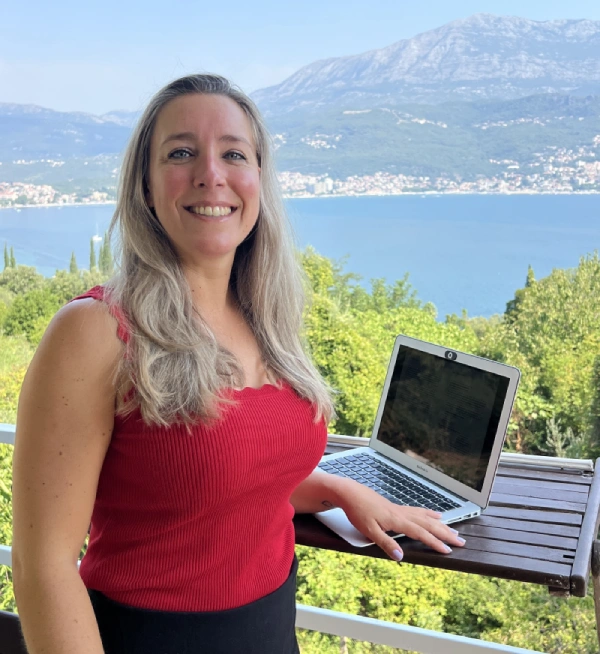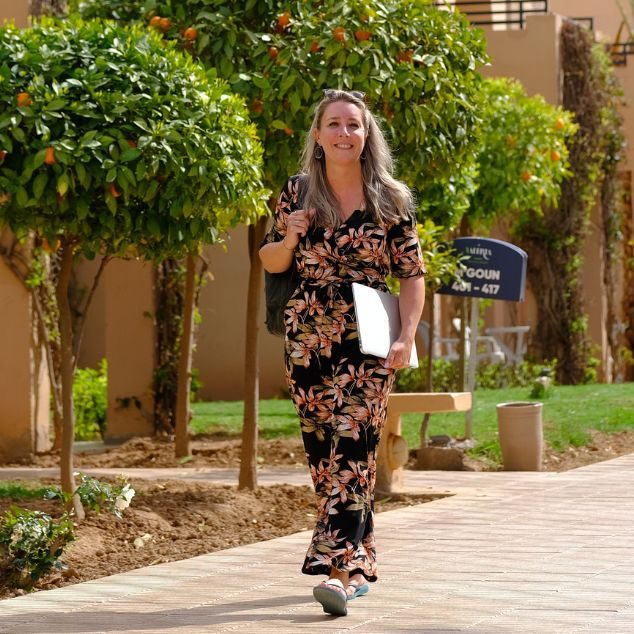


My name is Marlies and I work as an HR Manager at Brandfirm. Brandfirm is an online marketing agency with a friendly, informal culture. We work hard, but we find it equally important that people feel comfortable, can be themselves and enjoy working together.
Ten years ago an idea came to us that has since grown into a real tradition: working from abroad during the Dutch winter. Because to be honest, the winter months in the Netherlands can feel quite drab and gloomy. And once someone said, “Why don’t we just work from Bali?” something went on. That first time was exciting and a bit of an experiment. We are now ten years on and can say with conviction: our annual workation is one of the things that makes Brandfirm who we are.
Team culture and workation at Brandfirm: working together in Bali
Brandfirm is an online marketing agency where collaboration, trust and an open atmosphere are key. We believe that doing good work is not only about processes and tools, but especially about people who understand and strengthen each other. Our culture is close-knit: colleagues know each other well, help each other quickly and have genuine involvement in each other’s work. At the same time, there is also a lot of freedom, as long as you take responsibility. So we don’t steer on “visibility,” but on results and professionalism. Precisely because we have such a strong team culture, we find it extra important to keep investing in it and that is exactly what strengthens a workation.
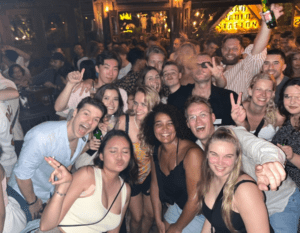
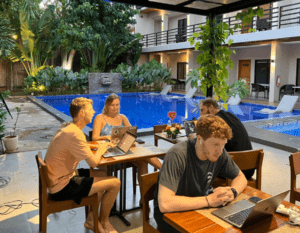
The impact of a workation on our team
The motivation behind our workation is simple: we want to combine job satisfaction and productivity with connection as a team. What it delivers? We actually notice the same return every year:
● Productivity is higher
● Employee satisfaction visibly increases
● Colleagues seek out and help each other more quickly
● We come back with new energy
And no, it’s not crazy that you feel better when you see more sun than rain. But the real benefit for us is the combination: you have peace, space, inspiration and you are together. That creates a kind of flow that you are less likely to create at the office.
The organization of our workations in Bali
Basically, we go to Bali every year. Since two years we add an additional destination. Bali remains a regular destination, and we choose a second country to alternate between. We usually rent a villa for 1-2 months, and colleagues can use it for a maximum of 3 weeks. Not everyone is present at the same time: we make a schedule that matches everyone’s preferences in terms of period as much as possible. An important starting point is that we want at least a 6-hour overlap with the Netherlands. In Bali it is usually 6 or 7 hours later (depending on summer time). Therefore, the working day often starts around 13:00 and we work until about 22:00.
That sounds long, but in practice it works surprisingly well. After all, you have all the space in the morning to: explore the island, exercise, have a leisurely breakfast or just relax.
It really feels like a vacation, and then you go back to work satisfied. A funny detail is that “lunch time” in Holland often coincides with dinner in Bali. So yes: then we order food and eat a hot meal during Dutch lunch. During the day there are plenty of times when people do something together: having coffee, a walk on the beach, a short trip. But there is also room for colleagues who need more rest. What we do find important is that it is not just a loose collection of vacations, but truly a shared experience.
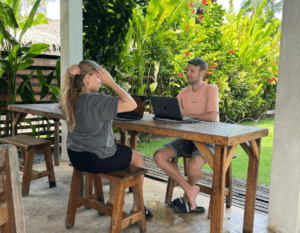
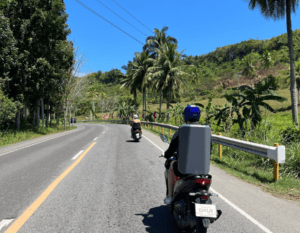
Remote working: freedom with responsibility
Remote working fits with how we view trust and autonomy. When you give people freedom, you often get back more than you think: ownership, motivation and responsibility. Among other things, it gives us:
- More flexibility for colleagues
- More job happiness
- And often more focus as well (less office pressure)
But with that comes a prerequisite: agreements are agreements. And you stay connected as a team – even when working remotely.

Challenges and insights from our workations
Of course it doesn’t always come naturally. We also learned plenty in ten years. Sometimes in a fun way, sometimes because something just didn’t work as well.
Reliable Internet (the classic)
In the beginning we mainly thought, “We’ll take care of it.” Now we know: good wifi is not a luxury, but a basic requirement. We now check this in advance and choose locations where it is guaranteed.
Team feeling that became less
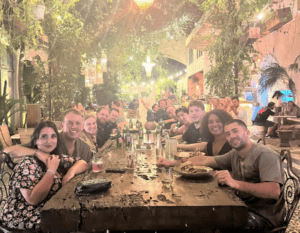
There was a year when we noticed that colleagues were making a lot of loose plans. People were going their own way, and while that’s allowed of course, the feeling of “together” declined. That’s when we decided that we needed to reposition the workation more clearly as a team-building moment. Since then we have explicitly stated the intention: freedom and connection. An example: Wednesday evenings are often our regular team evening. We have dinner together or do something fun. It is not obligatory, but it is “strongly desired”. That works well: you keep the connection without forcing it.
Clear expectations towards customers
We always tell the team: customers should not notice that we are on workstation. The service must remain as good as normal. And as soon as we notice that that is not working, we have to make adjustments. So far, this has almost always gone well, with the occasional exception, and it is precisely those moments that make us sharper in our agreements.
What can other employers learn from Brandfirm?
As HR, I think it’s important that people don’t “just roll” into a workation, but know what’s involved. That’s why I give colleagues going along for the first time a brief introduction with do’s & don’ts.
Do’s
- Make working hours and accessibility very concrete
- Make sure team moments are planned (without mandating)
- Encourage exemplary behavior from colleagues who have been along before
- Check wifi and workstations especially
- Monitor customer quality as top priority
Don’ts
- Thinking that things will “work themselves out”
- Not giving frameworks for fear of being strict
- Too much non-commitment causing everyone to live alongside each other
- Forgetting that new colleagues need extra guidance
What does it cost to go abroad with a team?
We at Brandfirm keep it practical and fairly distributed. The villa is paid for by Brandfirm. Airfare and living expenses are paid by everyone.
We find it important that everyone has their own bedroom, and preferably also their own bathroom – although that depends on price and availability. In Bali we have been using the same villa for years now, because it is a nice place and we know the owner well. That makes planning easier and gives peace of mind.

The impact of remote working on corporate culture
Remote working (and certainly workation) requires something of your culture. If you value control over trust, it’s going to chafe. With us, it works precisely because we build on :
- Trust
- Autonomy
- Ownership
- And open communication
Colleagues feel more responsible for their work, but also for each other. And because you experience such a working period abroad together, loyalty often grows naturally. You really get to know each other in a different way than just through meetings and deadlines.
The future of remote working and workstations
I think remote working and workations can be an ongoing part of modern employment. In any case, we continue to take this seriously, but we also see new challenges emerging. For example, more and more colleagues have children. For them, a workation to Bali is often more difficult to combine. Therefore, I want to explore how we can offer a suitable alternative for this group as well. One idea is a workation closer to home, for example within Europe (Mallorca or Portugal). That makes it logistically easier and lowers the threshold. But that is something we still want to discuss: what really suits the needs of the colleagues? What I do know for sure: if you organize it well, a work station is not just “a nice extra”, but an investment in culture, connection and energy.
Curious about vacancies? Check them out here.
More inspiration on working remotely from abroad
Wat is het verschil tussen een incentive reis en bedrijfsworkation?